
Becoming the Sea: Debra Drexler on Anselm Kiefer
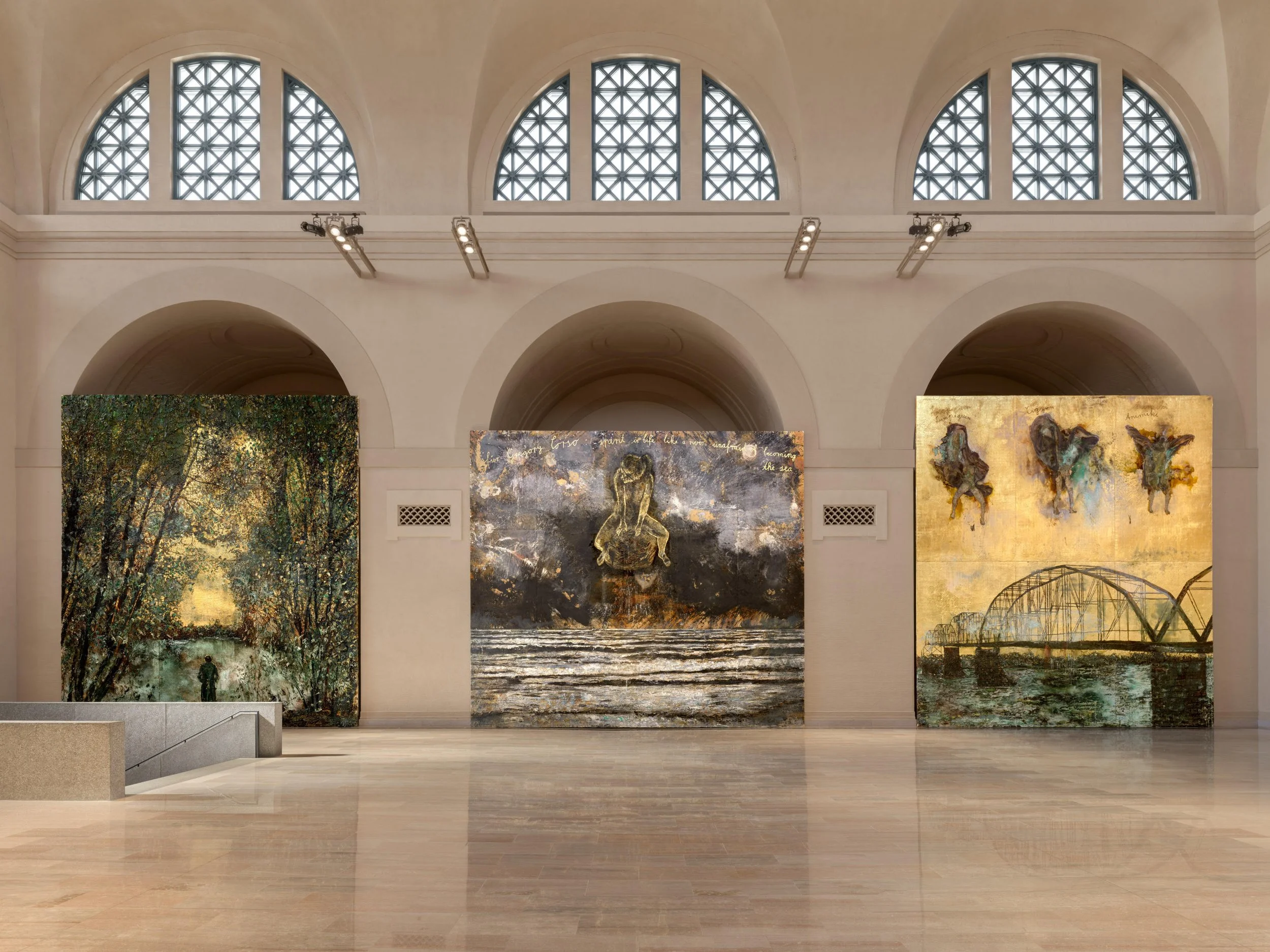
Anselm Kiefer, Becoming the Sea, Installation View of Sculpture Hall, St. Louis Art Museum
Anselm Kiefer, Becoming the Sea, St. Louis Art Museum
October 18th, 2025 to January 25th, 2026
Anselm Kiefer’s retrospective, Becoming the Sea, snakes through the St. Louis Art Museum. His love poem to St. Louis and its rivers commands the historic Sculpture Hall, which was built for the 1904 World’s Fair, and consists of five new paintings, each about 30-feet high, subsuming the viewer in the waters of the Missouri, Mississippi, and Rhine rivers. Much like the figures he depicts standing in front of bodies of water, standing before Kiefer’s work makes one feel small, a drop in a much larger ocean. My initial experience with Kiefer’s work was at SLAM in 1983, when, as a graduate student, I attended Expressions: New Art from Germany. Through alchemical engagement with material, his work transcends material. Experiencing Kiefer’s painting sent me on a quest as a painter to speak to the core of what it means to be human. Forty years later, standing before Kiefer’s monumental paintings of the Mississippi River brought me to tears.
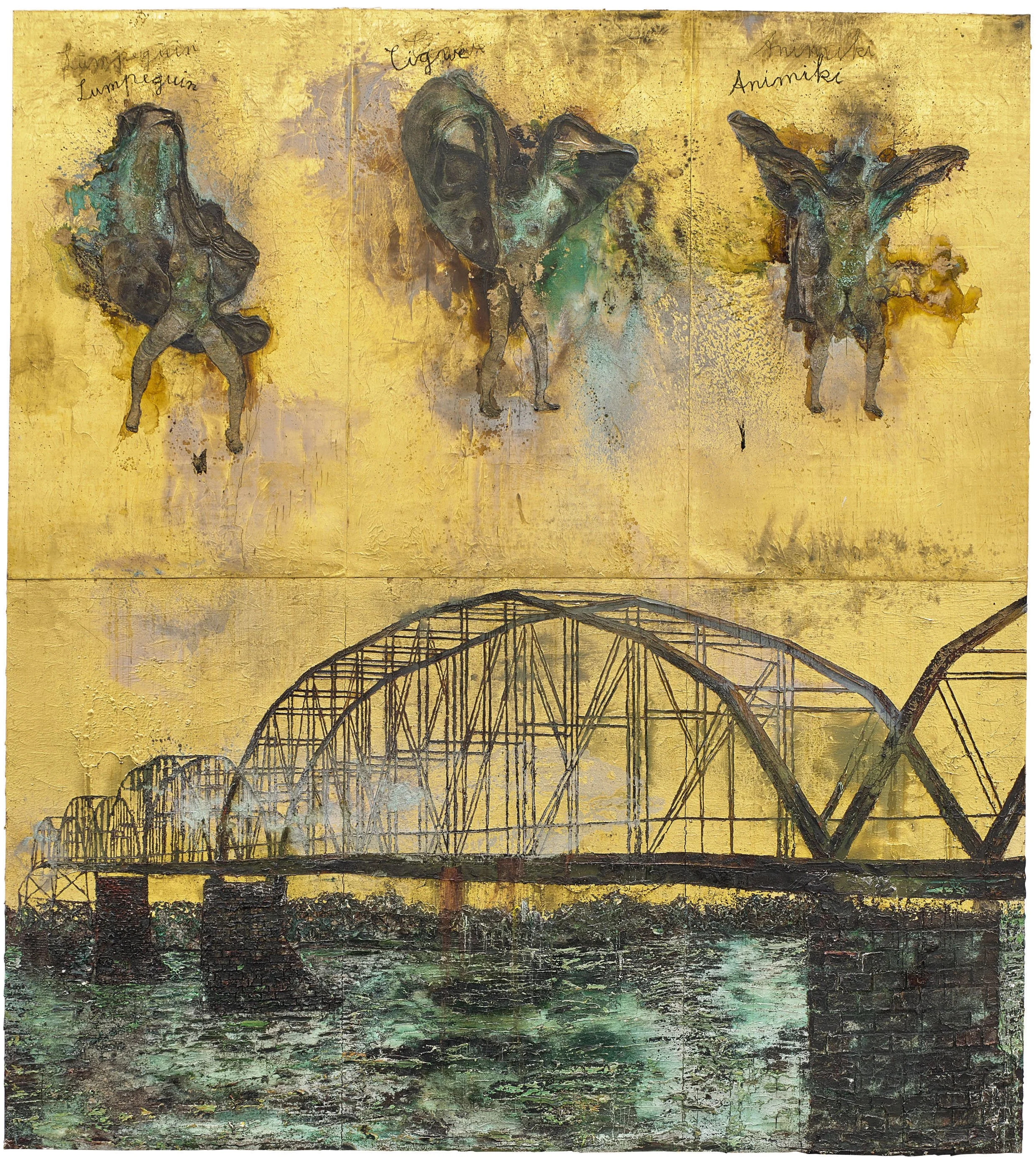
Anselm Kiefer, Lumpeguin, Cigwe, Animiki, 2025, Emulsion, oil, acrylic, shellac, gold leaf, and sediment of electrolysis on canvas; 30 ft 10 in. x 27 ft 7 in. x 4 in.
Collection of the artist and courtesy Gagosian
Kiefer’s process viscerally engulfs the viewer in patinaed greens, golds and earthen hues made from electrolysis of sediment, gold leaf, paint, emulsion, shellac, and collage of canvas on canvas. In Lumpeguin, Cigwe, Animiki, ethereal protective beings from the Anishinaabe and Wabanaki traditions float weightless in a gold sky above the dense depths of the Mississippi. The human presence is inscribed on the landscape by a historic bridge that, spider-like, rises from a stone base, massive enough to withstand the pounding of the water. Missouri, Mississippi has an even stronger sense of gravity, with a force that visually sweeps the viewer into the picture plane. Water is furiously beating against the substantial locks and dams at eye level. Above, a relief-like figure swims through the space, both leaden and graceful. In contrast to the overall heft of the painting, the confluence of the rivers is indicated through a delicate line of gold handwriting. I found myself dissolving into the individual marks and layers of Kiefer’s fluid rendering of water. Beyond the imagery, it is the transformation of materials which creates an experience of an expanded state of consciousness. Like any transmutation, the whole is greater than the parts.
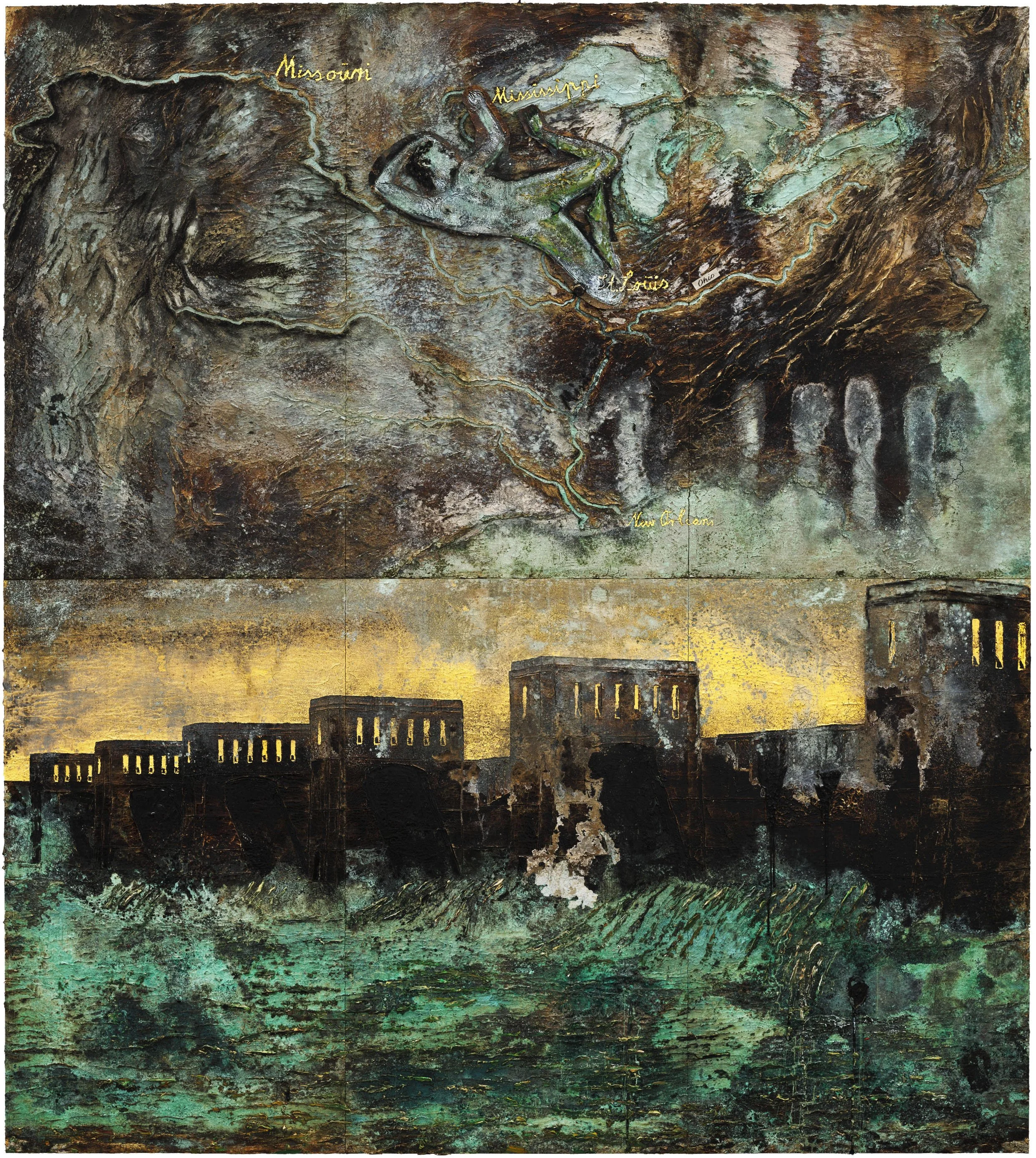
Anselm Kiefer, Missouri, Mississippi, 2024, Emulsion, oil, acrylic, shellac, gold leaf, sediment of electrolysis, and collage, 30 ft. 10 in. x 27 ft. 7 in. x 4 in.
Collection of the artist and courtesy Gagosian
The Mississippi River is gritty, dark, and powerful, concealing its mysteries and dangers. In 1991, Anselm Kiefer spent time on the river, investigating its locks, dams and bridges. During that same period, I was also engaging with the Mississippi River, directing Riverfaces, an arts organization that held workshops culminating in an annual parade and performance on the river with giant puppets, masks, and costumes. I accompanied an environmental artist by canoe, who swam through the imposing new locks and dams depicted in Missouri, Mississippi. I swam a 10-mile stretch of river myself, albeit in a less treacherous area. In 1991, I also painted a series of larger-than-life-sized figures emerging from primordial black waters. I still hold a bodily memory of the landscapes which Kiefer depicted, and I felt the paintings in my gut as much as I saw them with my eyes.
With St. Louis Art Museum’s commitment to contemporary German, Austrian and Swiss painting, it is no surprise that Kiefer mounted his first US museum exhibition in 20 years there. My father, who was of German, Austrian and Swiss heritage, never understood contemporary painting until one day, late in his life, when I took him on a tour of SLAM’s collection. Translating the encoded symbolism and language of abstraction, I pointed out the connections between works of artists such as Beckmann, Kollwitz, Kokoschka, Beuys, Richter, and Kiefer to the history of WWII and the Cold War. After that, my father couldn’t stop talking about contemporary German art.
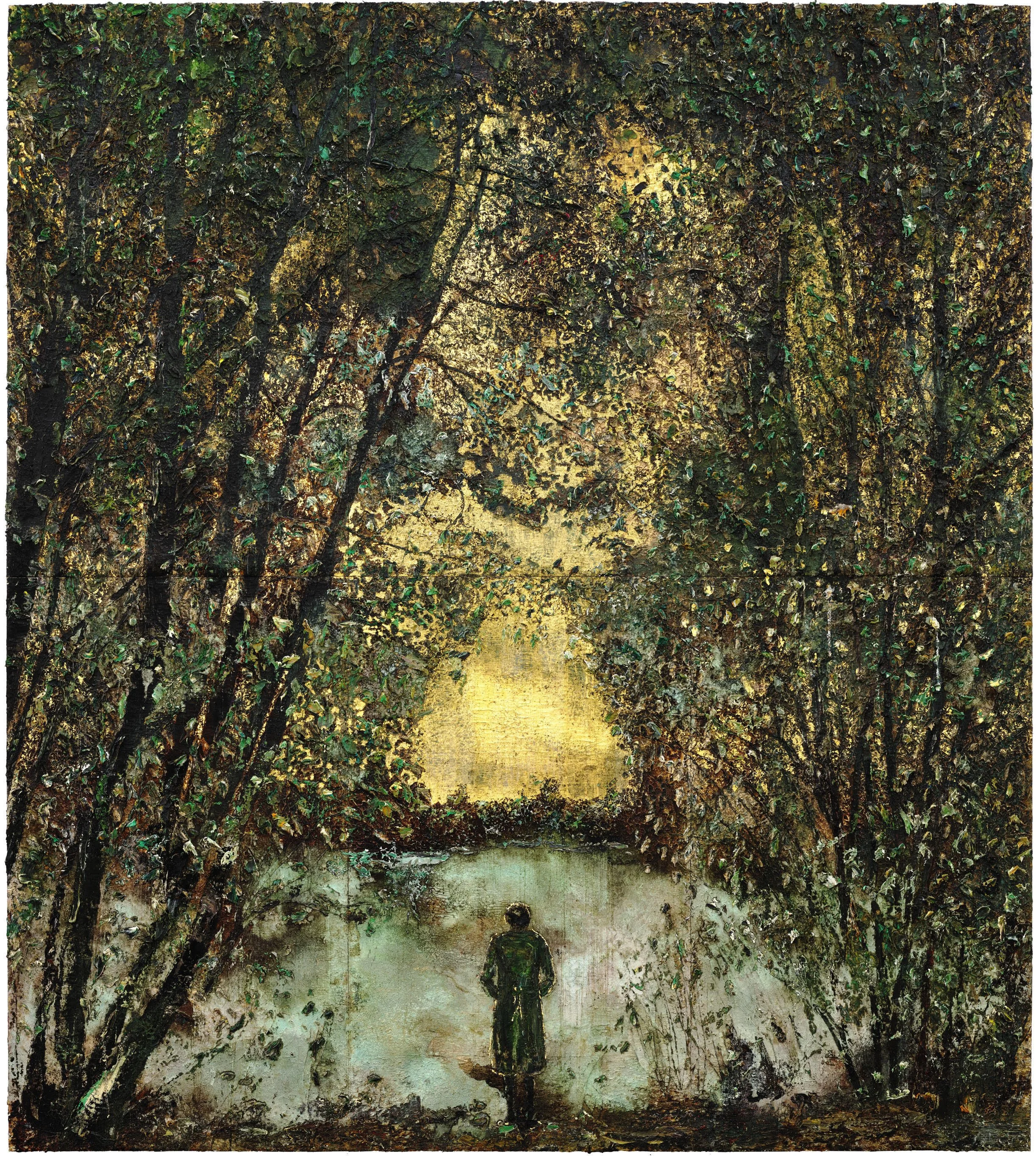
Anselm Kiefer, Anselm fuit hic (Anselm Was Here), 2024, Emulsion, oil, acrylic, shellac, gold leaf, and sediment of electrolysis on canvas, 30 ft. 10 in. x 27 ft. 7 in. x 4 in.
Collection of the artist and courtesy Gagosian
Kiefer’s Sculpture Hall pieces speak to the inevitability of death, but in a way that sparks hope of transcendence beyond the body. The day of my father’s death, I stood at the confluence of the Missouri and Mississippi Rivers, like Kiefer’s figure in Anselm fuit hic (Anselm Was Here) seeing love as a river that transcends time and space.
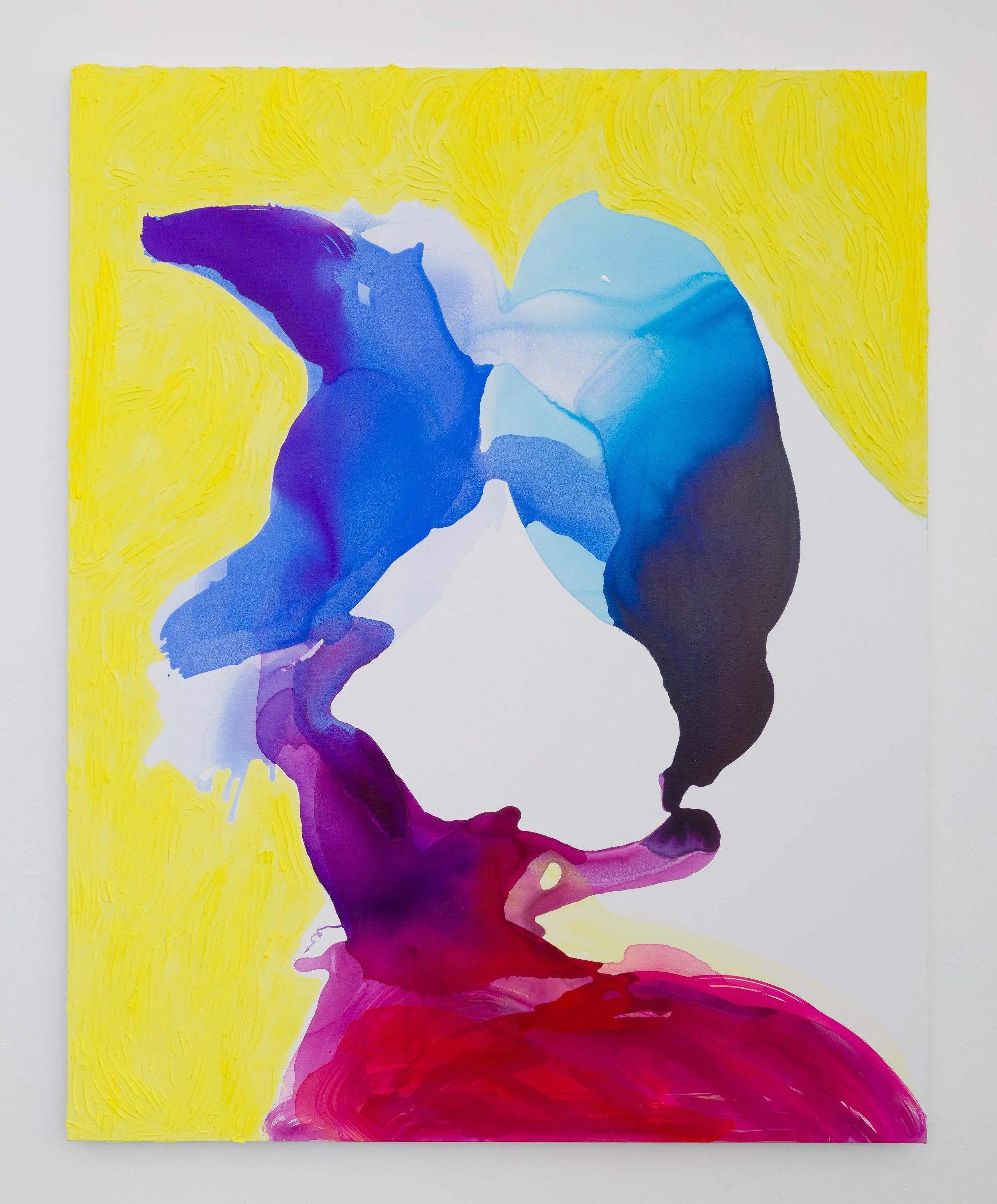
Debra Drexler, Convergence, 2024. Acrylic on Canvas, 60 x 48 inches
Originally from St. Louis, Debra Drexler is a New York-based painter whose work engages in a feminist conversation with the history of action painting, which is informed both by participating in the contemporary resurgence of abstraction coming out of New York, and by living in the Post-Colonial Pacific for close to three decades. She recently retired from the University of Hawai’i at Manoa where she was a Professor of Drawing and Painting (1992-2025) and Director of the Museum and Galleries (2023-25). She has had over 30 solo and over 100 group exhibitions, and she is represented by Front Room Gallery.